At a glance
- Daytime
- 16 to 20°C
- Nights
- 8 to 12°C
- Sea
- about 15 to 18°C
- Rainy days
- 5 to 7 a month
- Daylight
- about 10 hours
- Best for
- Walks, old towns, food
In 2 minutes
The essentials
What travellers ask us most, in a line or two.
Don't miss
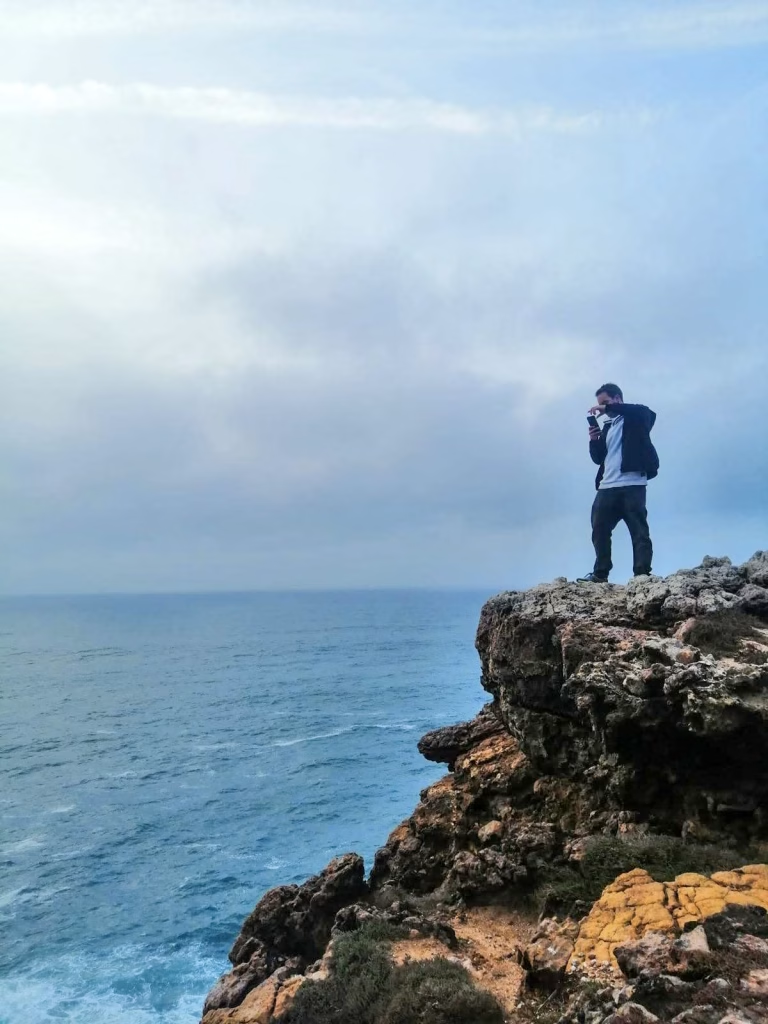
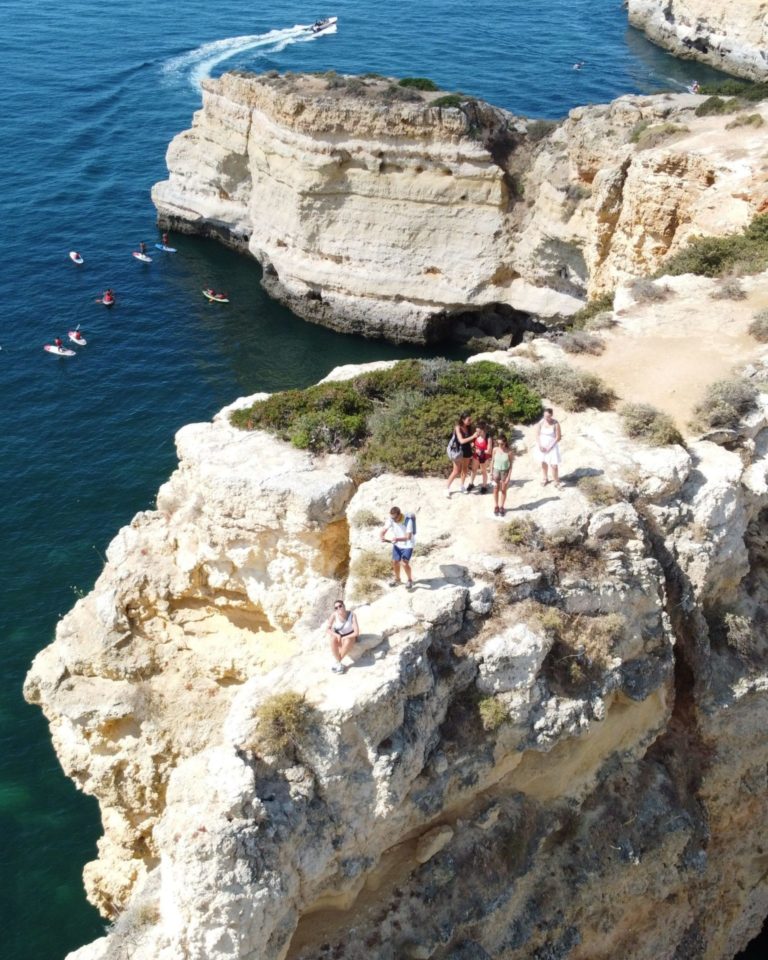 Benagil and Marinha from the clifftopThe famous viewpoints without the summer crowds. The clifftop paths don't depend on a calm sea, and the winter waves make them even more dramatic.
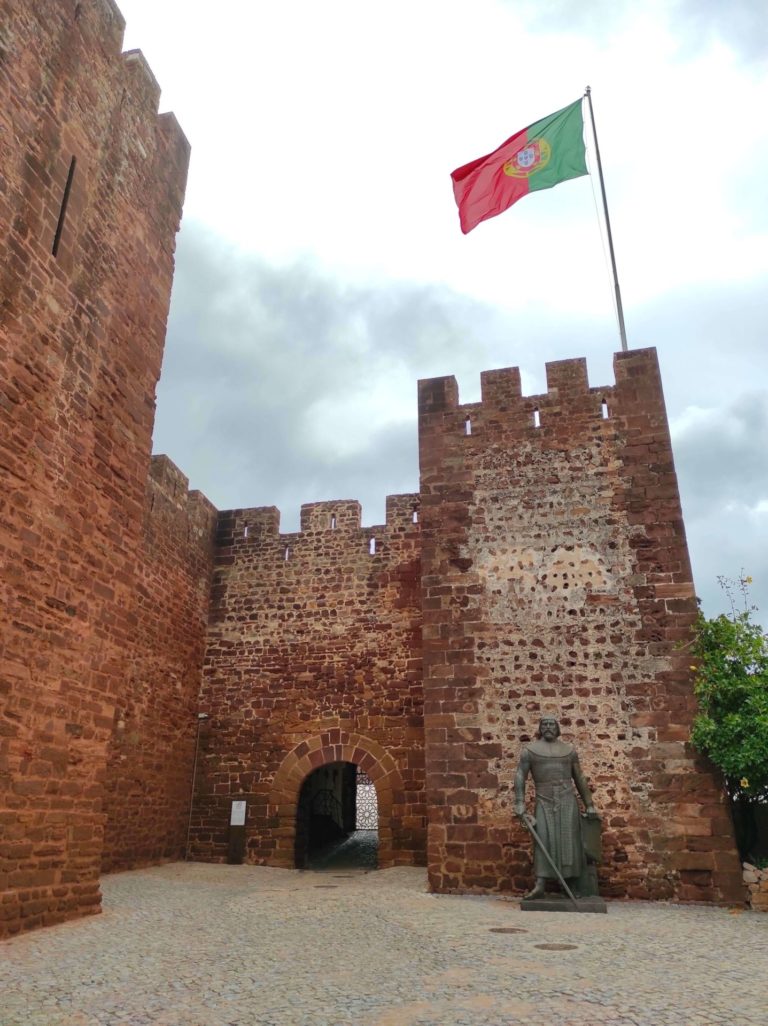
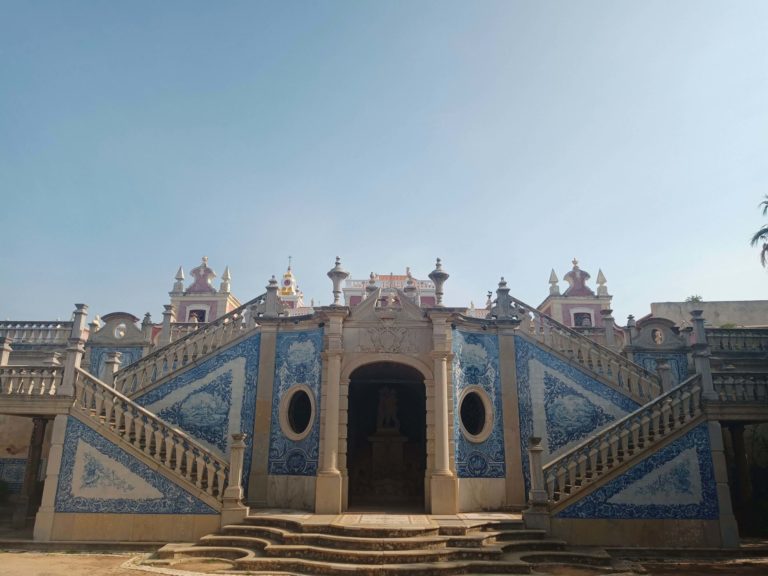 Estói Palace gardensA pink 19th-century palace with tiled terraces and gardens, 15 minutes north of Faro. The Roman ruins of Milreu are just down the road.
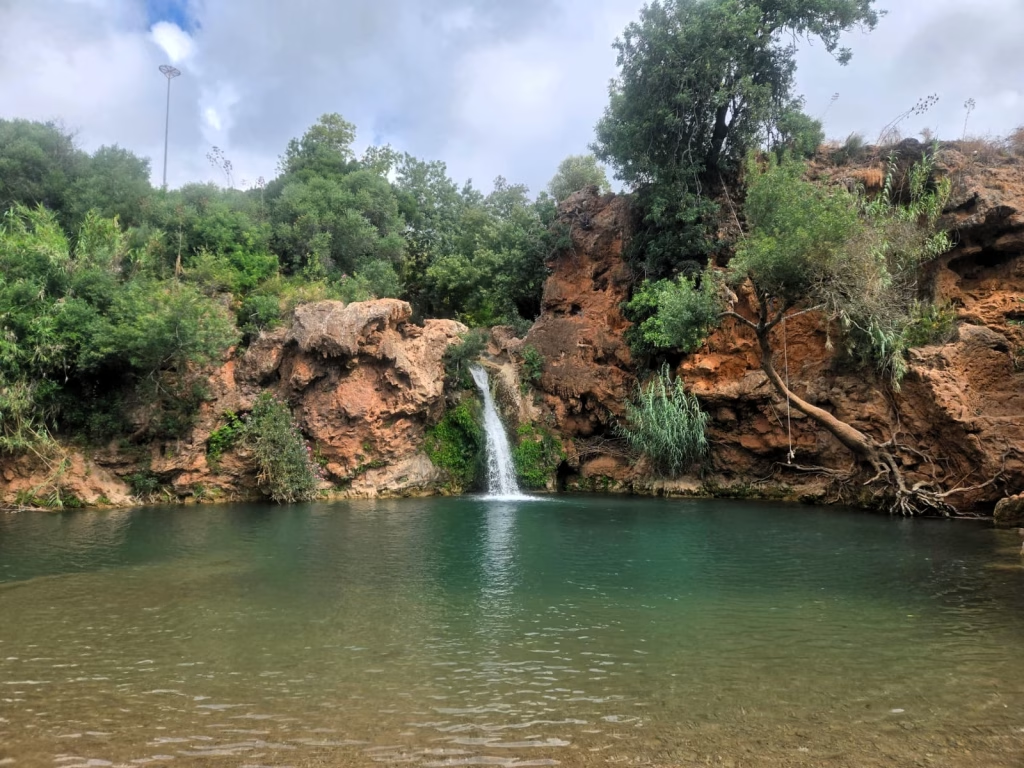
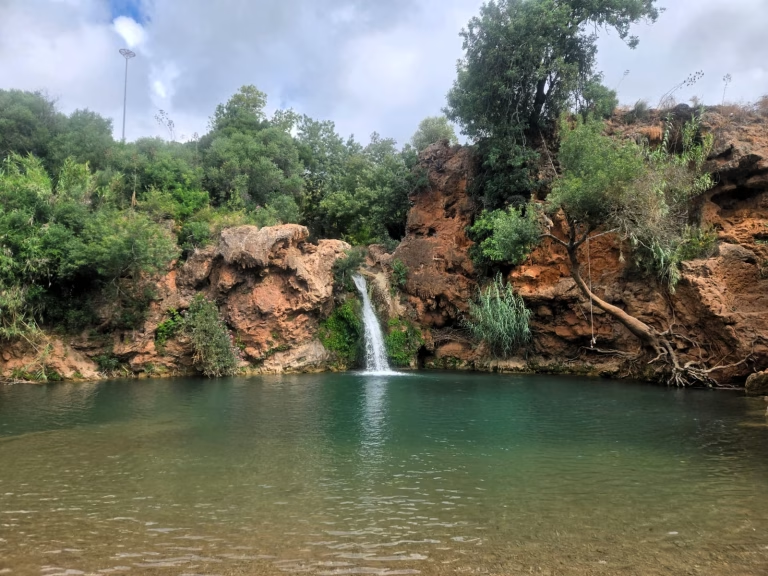 Pego do Inferno waterfallA small waterfall tumbling into a green pool in the countryside near Tavira. Winter rain brings it to life.
Is the Algarve warm in winter?
It depends where you're from. Faro averages 16 to 20°C by day in winter, about double a January day in London or Paris, so many northern Europeans and Canadians walk in a T-shirt at midday. Evenings drop to 8 to 12°C and need a jumper.
Does it rain a lot in the Algarve in winter?
Not much. Faro gets rain on about 5 to 7 days a month from November to March. December is the wettest month, February and March the driest, and rain usually comes in bursts.
Can you swim in the Algarve in winter?
Only if you're brave. The sea is around 15 to 18°C, so most people paddle or choose a hotel with a heated or indoor pool.
What is the best winter month to visit the Algarve?
February or March. They're the driest months of the season, the days are longer, the almond trees flower and Carnival falls in February. November has the warmest days of the winter.
Is everything closed in the Algarve in winter?
No. Beach restaurants and resort bars close from November to around Easter, but towns where people live all year, like Faro, Lagos, Tavira, Olhão and Loulé, stay open.
Where is the best place to stay in the Algarve in winter?
A real town, not a resort. Faro, Lagos and Tavira are the best bases. Albufeira works if you stay in or near the Old Town.
See it with us
Algarve Coast Tour from Faro
Full day on land · small group, max 8 · your guide takes the photos
4.9 · 2,380+ reviews
€55 per traveller · free cancellation up to 24h before
Check availabilityWinter in the Algarve runs from November to March. It’s quiet, green and mild, and it’s nothing like the summer postcards. We guide travellers here all year, so this guide is honest about both sides. It covers the weather month by month, what’s open, what to do on a rainy day, and the things that catch winter visitors out, each with the fix.
The short answer: come in winter for quiet clifftop walks, old towns, long lunches and almond blossom. Don’t come for sunbathing or a warm sea. Days are usually 16 to 20°C and sunny, which feels like spring if you’re coming from London, Paris or Toronto. Nights drop to 8 to 12°C, and it rains on about 5 to 7 days a month.
Is the Algarve worth visiting in winter?
Yes, if you pick the right kind of trip. Winter is the season for walking, sightseeing and food. The coastal paths are quiet, the light is soft and golden all day, and the famous viewpoints are far calmer than in summer. Hotels and flights are often much cheaper than in summer, except over Christmas and New Year.
Who winter is great for
- Couples and friends who like walking, old towns and good food
- Photographers: low sun, clear air and big Atlantic waves
- Anyone escaping a northern winter for some daylight and 17°C
- Long-stay travellers and remote workers who base themselves in a real town
When we’d honestly tell you not to come
- You want guaranteed beach days and a warm sea. Come between June and October instead.
- You want resort nightlife. Most of it closes from November until around Easter.
- Your only plan is boat trips to the sea caves. Winter swell cancels them more often.
- You’re booking a holiday flat without asking about heating (more on that below).
Algarve weather in winter, month by month
These are the official averages for Faro from IPMA, Portugal’s weather institute (1991 to 2020). The west coast around Sagres is windier, and the hills inland are a few degrees colder at night.
Cold or warm? It depends where you’re from
For us locals, January is cold. For most of our travellers, it’s a break from winter. A typical January day in Faro reaches 16°C, about double the 8°C of London, Dublin or Paris, while Toronto stays below freezing. Faro also has about half as many rainy days as London in January. Plenty of travellers from northern Europe and Canada walk the clifftops in a T-shirt at midday. The catch is the evenings and the indoors, which feel colder than the numbers suggest (see the honest tips below).
Faro in winter, month by month
| Month | Temperature | Rainy days | What it’s like |
|---|---|---|---|
| NovemberThis month | 12°Cnight20°Cday | about 7 days | The mildest winter month. Quiet, with some stormy days. |
| DecemberThis month | 10°Cnight17°Cday | about 7 days | The wettest month. Christmas lights and markets. |
| JanuaryThis month | 8°Cnight16°Cday | about 6 days | The coolest month. Almond blossom begins. |
| FebruaryThis month | 9°Cnight17°Cday | about 5 days | The driest month. Almond blossom and Carnival. |
| MarchThis month | 11°Cnight19°Cday | about 6 days | Spring arrives: wild flowers and longer days. |
Sea: around 15 to 18°C in winter. Most people paddle, though some northern Europeans happily swim. Daylight: about 10 hours in December and January, with the sun setting around 17:15 near Christmas. Rain: it usually comes in bursts with sunny spells in between, and a stormy spell rarely lasts more than a couple of days. December is the wettest month. February and March are the driest and brightest of the season.
Where to stay in the Algarve in winter
This is the decision that makes or breaks a winter trip. The places that feel like ghost towns are holiday resorts built for summer. The places that stay alive are towns where people live all year.
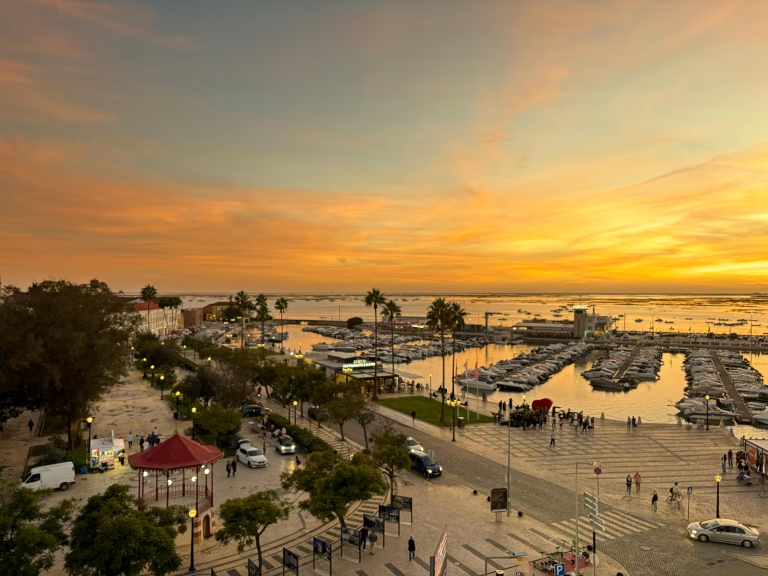
- Faro: the capital, with a real university-town buzz, the airport 15 minutes away, trains and buses in every direction. Our tours start here, and our Faro guide has the rest.
- Lagos: the liveliest town in the west in winter, with a big community of remote workers.
- Tavira: beautiful and calm, best for a slow stay.
- Olhão and Loulé: authentic market towns that hardly change with the seasons.
- Albufeira: stay in or near the Old Town, not on the Strip.
Small beach resorts and holiday complexes can feel empty, especially in early December and in January. They’re fine as a quiet base if you have a car, but not if you want to walk out for dinner.
Best things to do in the Algarve in winter
Winter is when the Algarve’s quieter side shines. These are the days we’d plan, from the coast to the hills. For the coast in more detail, see our guides to Benagil, Praia da Marinha and Algar Seco.
Beaches & nature Lagoa
Benagil and Marinha from the clifftop
The famous viewpoints without the summer crowds. The clifftop paths don't depend on a calm sea, and the winter waves make them even more dramatic.
Good for Late morning, on a dry day
Our tip
Go late morning, when the sun is on the cliffs. After rain, stay well back from the edge.
See & do Estói, near Faro
Estói Palace gardens
A pink 19th-century palace with tiled terraces and gardens, 15 minutes north of Faro. The Roman ruins of Milreu are just down the road.
Good for Any dry morning
Our tip
Pair it with Milreu and a coffee in the village square.
Beaches & nature Near Tavira
Pego do Inferno waterfall
A small waterfall tumbling into a green pool in the countryside near Tavira. Winter rain brings it to life.
Good for A dry day after some rain
Our tip
Wear shoes with grip, as the path gets muddy. Skip it during a weather warning.
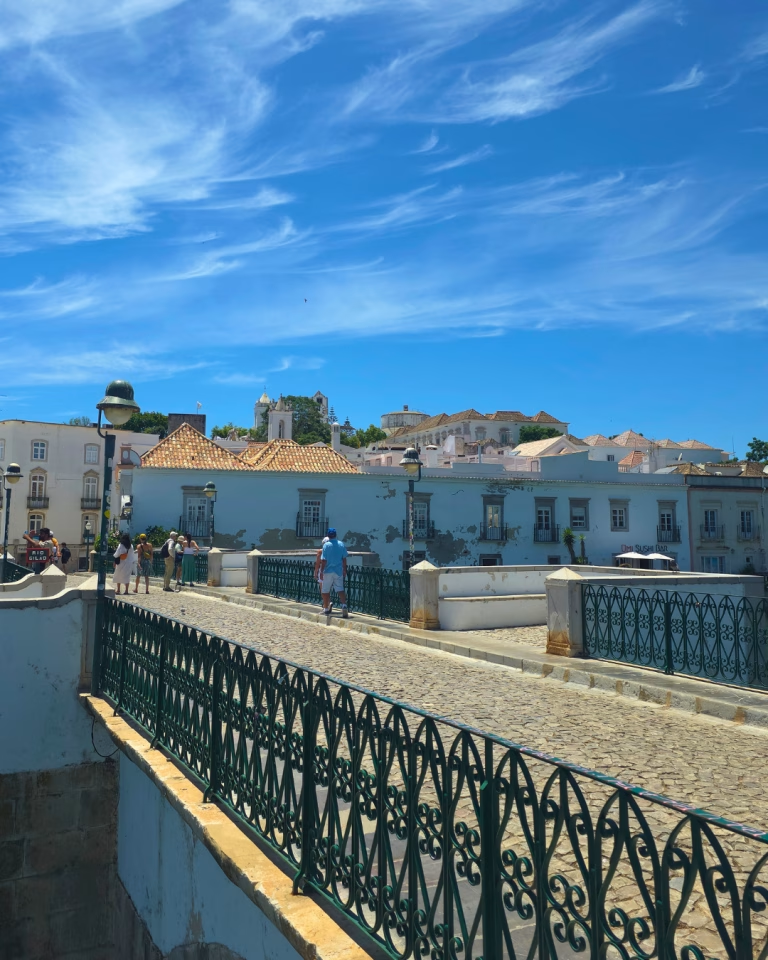
See & do Eastern Algarve
Tavira
The Algarve's prettiest old town: the old bridge, churches, a castle garden and the river. It stays lived-in all winter.
Good for All day
Our tip
Climb to the castle garden for the view over the rooftops.
Beaches & nature Faro
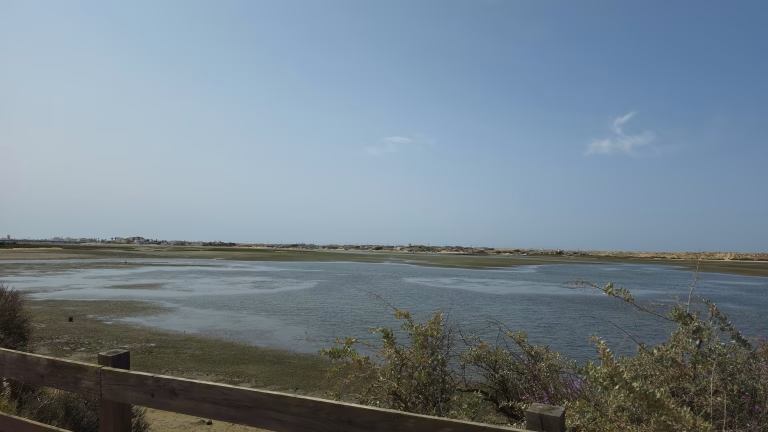
Flamingos on the Ludo Trail
A flat walk or bike ride through the Ria Formosa salt pans, right next to Faro. Winter is the season for flamingos.
Good for Late afternoon
Our tip
Bring binoculars and go in the late afternoon light.
Beaches & nature Inland Algarve
Almond blossom in the hills
From mid-January into February, almond trees flower white and pink across the inland hills, especially around Alta Mora, near Castro Marim.
Good for Mid-January to February
Our tip
Peak bloom changes every year. Ask locally before you drive out.
What to do on a rainy day in the Algarve
Rainy days happen, and they usually mean a morning of showers and a brighter afternoon. Keep one of these ideas up your sleeve and check the radar before you give up on the day.
- Go to a covered market. Loulé (busiest on Saturday mornings) and Olhão’s two red-brick market halls by the water are full of life whatever the weather.
- Have a proper long lunch. Winter is the season for cataplana, stews and grilled fish by a window. It’s what locals do on a wet day.
- Take the coastal train. The line from Lagos to Vila Real de Santo António stops in Faro, Tavira and Portimão. It’s a cheap, dry way to see the region.
Watch out for Mondays, when most museums are closed. For museums with opening hours, what’s open on a rainy Monday and a half-day plan in Faro, see our rainy day guide.
On a day with a yellow or orange weather warning, skip the cliffs, the seafront and the waterfall. Storms here are short. The next day is usually clear.
Festivals, fairs and big days
What's on in the Algarve this winter
Coming up
On now
Feira Franca de Albufeira
A big traditional street fair, back in 2026 after a break: stalls of clothes, homeware, honey, dried fruit and local sweets, plus rides for kids and grown-ups.
Official info about Feira Franca de Albufeira, opens in a new tab
In 3 days
Christmas in Faro: Jardim Encantado
The Jardim Manuel Bivar becomes the Jardim Encantado, a Christmas garden for families. On the 24th, open 10:00 to 13:00 only.
Official info about Christmas in Faro: Jardim Encantado, opens in a new tab
In 5 weeks
New Year’s Eve in Albufeira (Carpe Nox)
A beach concert with Calema from 22:00, fireworks at midnight, then a DJ.
Official info about New Year’s Eve in Albufeira (Carpe Nox), opens in a new tab
In 6 weeks
Dakar Rally start
The Dakar starts in the Algarve: the prologue on the 9th and the first stage on the 10th, around Loulé.
Every year
- Feb
Almond Blossom Festival, opens in a new tab
February (2027 dates not out yet) · Alta Mora, Castro Marim
Signposted walks among the almond trees, folk music, local food, crafts and a giant almond tart.
- Feb
Loulé Carnival, opens in a new tab
Expected 7 to 9 February 2027 (official dates not out yet) · Loulé, Avenida José da Costa Mealha · Small entry fee (€2 in 2026)
Satirical floats, music and costumes on the main avenue, running since 1906. Alte and Quarteira hold parades too.
- Feb
Moncarapacho Carnival, opens in a new tab
Usually Carnival Sunday and Tuesday afternoons (9 February in 2027) · Moncarapacho (Olhão) · Free
A village carnival famous for its floats covered in paper flowers.
See what's on all over the Algarve
Dates can change. Check the event's link before you plan your trip around it.
Honest tips: what catches travellers out in winter (and how to avoid it)
We read hundreds of reviews, forum posts and messages from travellers who came in winter. These are the frustrations that come up most, with what actually helps.
9 things that catch travellers out. Tap one to see what helps.
Most common
“Our rental was freezing”
What helps
- Ask before you book.
- Many Algarve houses are built to stay cool, not warm, and the only heating is often an air conditioner set to warm.
- It catches out travellers from northern Europe and North America most, because at home the cold stays outside.
- Ask the host what heating there is in each bedroom and whether electricity is included.
- Hotels are usually warmer than holiday flats.
- Pack a warm layer for the evenings: nights are 8 to 12°C.
“Everything was closed”
What helps
- Pick a real town, not a resort.
- Beach restaurants and resort bars close from November to around Easter, and small resorts can feel deserted.
- Faro, Lagos, Tavira, Olhão, Loulé and Albufeira’s Old Town stay open.
- Google Maps hours are often wrong in winter, so check the place’s own page or call before you drive.
“It rained for days”
What helps
Plan for showers, not a washout. December is the wettest month, with about 7 rainy days in Faro, and rain usually comes in bursts. Check the IPMA forecast, keep a rainy-day plan and book things you can move. Our tours have free cancellation up to 24 hours before.
Getting around
“Our boat trip was cancelled”
What helps
See the coast from the clifftop. Winter swell cancels the sea-cave boat trips more often, sometimes on the day. The clifftop paths at Benagil, Marinha and Algar Seco don’t depend on the sea, and the waves make them even more dramatic. If you want to be on the water, the Ria Formosa lagoon near Faro is much calmer.
“We got stuck without a car”
What helps
- Check the winter timetables.
- Many buses run less often from November to April, especially at weekends, the airport bus to Lagos drops to a couple of runs a day, and town buses often stop around 8pm.
- Check Vamus Algarve before you set off, plan how you’ll get back, and keep a taxi or Bolt number handy.
- A day tour from Faro solves the return trip.
What to expect
“It got dark so early”
What helps
- Start early and end at a viewpoint.
- You get about 10 hours of daylight, and the sun sets around 17:15 near Christmas.
- Do the sightseeing first, catch sunset from the cliffs, then have dinner.
“Nothing was open on Christmas Day”
What helps
Plan the 24th and 25th ahead. Christmas Eve is a family evening, and on the 25th most shops, museums and many restaurants close, with very few buses and trains. Book Christmas lunch weeks ahead or stay somewhere with a kitchen. More in our Christmas and New Year guide. 1 and 8 December and 1 January are public holidays too.
“The sea was too cold to swim”
What helps
- Come for the views, not the swim.
- The sea is around 15 to 18°C.
- A quick dip on a calm, sunny day is lovely, and some northern Europeans swim every day.
- If you want to swim, choose a hotel with a heated or indoor pool.
“The beach looked nothing like the photos”
What helps
- Winter moves the sand.
- Storms can strip beaches back to rock, and after last winter 35 Algarve beaches lost sand.
- There are no lifeguards in winter.
- Stay away from the foot of the cliffs after heavy rain, because that’s when rockfalls happen, and keep back from the edge on the clifftops when the ground is wet.
Algarve in winter: final thoughts
Winter won’t give you a beach holiday, and we won’t pretend it does. It gives you the Algarve the way locals know it: quiet clifftops, waterfalls running, almond trees in flower, towns that belong to the people who live there, and a table by the window when it rains. Pick a real town as your base, pack a jumper, keep a rainy-day plan, and you’ll have a better trip than most summer visitors.
If you’d like a hand, our small-group days start in Faro, and your guide adapts the day to the weather. Have a question about your dates? Send us a message. We’re happy to help, whether you book with us or not.
The useful bits
Plan your visit
Quick answers
10 questions people ask us all the time. Tap one to see the answer.
Is the Algarve warm in winter?
It depends where you're from. Faro averages 16 to 20°C by day in winter, about double a January day in London or Paris, so many northern Europeans and Canadians walk in a T-shirt at midday. Evenings drop to 8 to 12°C and need a jumper.
Does it rain a lot in the Algarve in winter?
Not much. Faro gets rain on about 5 to 7 days a month from November to March. December is the wettest month, February and March the driest, and rain usually comes in bursts.
Can you swim in the Algarve in winter?
Only if you're brave. The sea is around 15 to 18°C, so most people paddle or choose a hotel with a heated or indoor pool.
What is the best winter month to visit the Algarve?
February or March. They're the driest months of the season, the days are longer, the almond trees flower and Carnival falls in February. November has the warmest days of the winter.
Is everything closed in the Algarve in winter?
No. Beach restaurants and resort bars close from November to around Easter, but towns where people live all year, like Faro, Lagos, Tavira, Olhão and Loulé, stay open.
Where is the best place to stay in the Algarve in winter?
A real town, not a resort. Faro, Lagos and Tavira are the best bases. Albufeira works if you stay in or near the Old Town.
What should I pack for the Algarve in winter?
Layers, a waterproof jacket, shoes with grip, a warm jumper for the evenings and sunglasses. Many holiday flats are cold indoors at night.
What to do on a rainy day in the Algarve?
Visit a covered market, have a long lunch, see Faro's cathedral and museum, taste local wine, take the coastal train or book a spa. Storms rarely last more than a day or two.
Do you need a car in the Algarve in winter?
Not if you stay in Faro, Lagos or Tavira. Buses run less often in winter, so check the timetable and plan how you'll get back, or join a day tour.
Do Choose Your Route tours run in winter?
Yes. Our small-group land tours run from Faro all winter, with the day adapted to the season and the weather. You can cancel for free up to 24 hours before.
Nothing here yet. Ask our assistant →
Have you been here?
One tap. We only count the answers, never who gave them.
What travellers say
“This was the highlight of my 3-day trip to Faro! The tour was well organised, punctual, and showcased stunning scenery, especially the breathtaking Benagil Caves.”
★★★★★ Tripadvisor T · Tripadvisor · Read all reviews
Did this help?
Spotted something out of date? and we'll check it this week.

Told by
We're a small team of local guides from Faro. We write about the places we take travellers to, and we check the details before we publish.
More stories from our team →